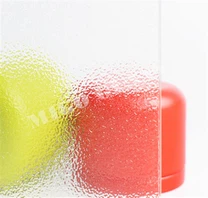
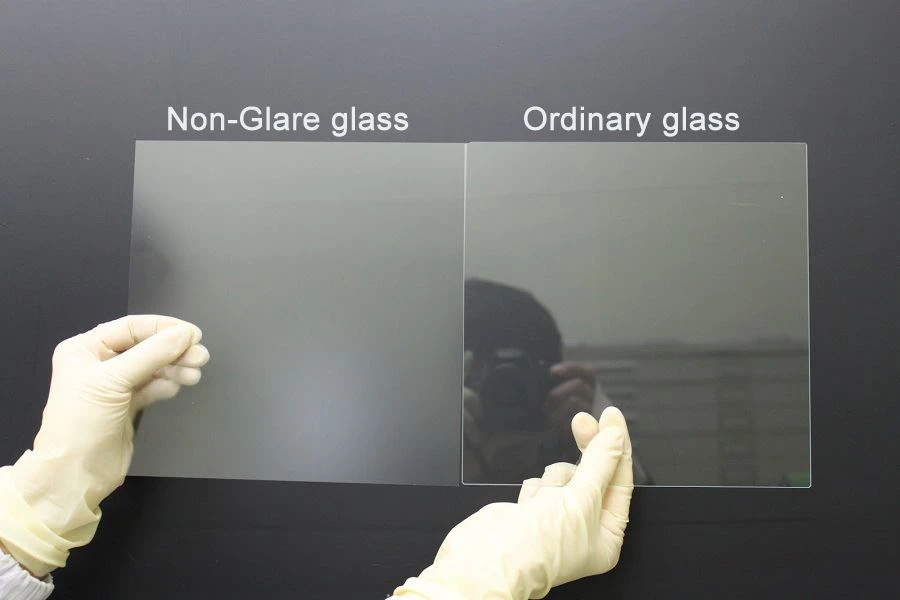
Non-Glare Glass, also called anti-glare glass in English is a kind of glass that is specially processed on the surface of the glass. Its characteristic is to change the reflective surface of the original glass into a matte non-reflective surface. The principle is to subject both sides or one side of high-quality glass sheets to special processing.
Compared with ordinary glass, it has a lower reflectance, and the reflectance of light is reduced from 8 percent to less than 1 percent , thereby reducing the interference of ambient light, improving the clarity of the picture, reducing the reflection of the screen, and making the image clearer and more lifelike. Using technology to create clear and transparent visual effects, allows viewers to experience better sensory vision.
Anti-reflective (AR) glass is optically coated on one or both sides. The anti-reflective coating is usually a dielectric coating and can be applied to the glass in a single layer or multiple layers. When this invisible optical coating is applied to a glass substrate it accomplishes the following:
Diminye refleksyon sifas yo
Ogmante transmisyon limyè
Ogmante transmisyon vè ak klète
Ogmante klète=pi bon definisyon kontras
Diminye imaj fantom / refleksyon miltip
Youn nan diferans ki genyen ant vè anti-reflektif ak vè ki pa-ekla se kapasite pou personnaliser kouch pou longèdonn limyè espesifik. Kouch AR yo ka Customized pou vizib, UV ak / oswa NIR bann espèk yo.
Kouch anti-reflektif yo ka aplike sou nenpòt substrate vè ki gen ladan Gorilla Glass, Borofloat, Ultra Clear Low Iron Float Glass, Ultra Thin Glass.

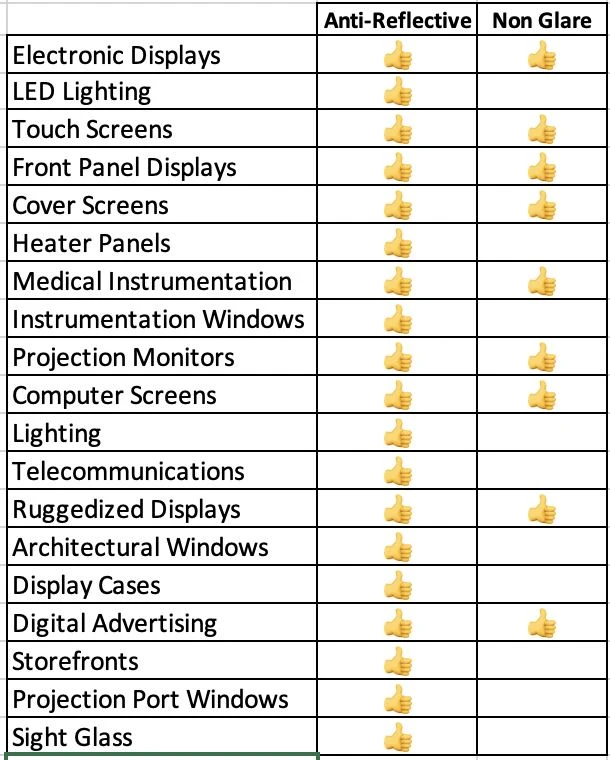
Now that we have explored how both Non-Glare and Anti-reflective glass are produced, let's look at their typical applications. The matrix below can help steer you in the right direction when deciding between Anti-Reflective and Non-Glare Glass.